Introduction
Modern commercial kitchens, hotels, restaurants, catering facilities, and food processing units require efficient cooking equipment to prepare large quantities of food consistently. An Induction Cooking Kettle uses electromagnetic induction technology to heat a compatible cooking vessel, enabling controlled, efficient bulk cooking.
Compared with conventional gas-fired equipment, induction cooking offers precise temperature control, reduced heat loss to the surroundings, and a flame-free cooking area. Actual energy savings depend on the equipment design, cooking process, and operating conditions.
Pankti Industries Pvt. Ltd. serves industrial equipment needs. Understanding the working principle, features, applications, and selection criteria of an induction cooking kettle helps commercial food businesses identify equipment that fits their production needs.
What Is an Induction Cooking Kettle?
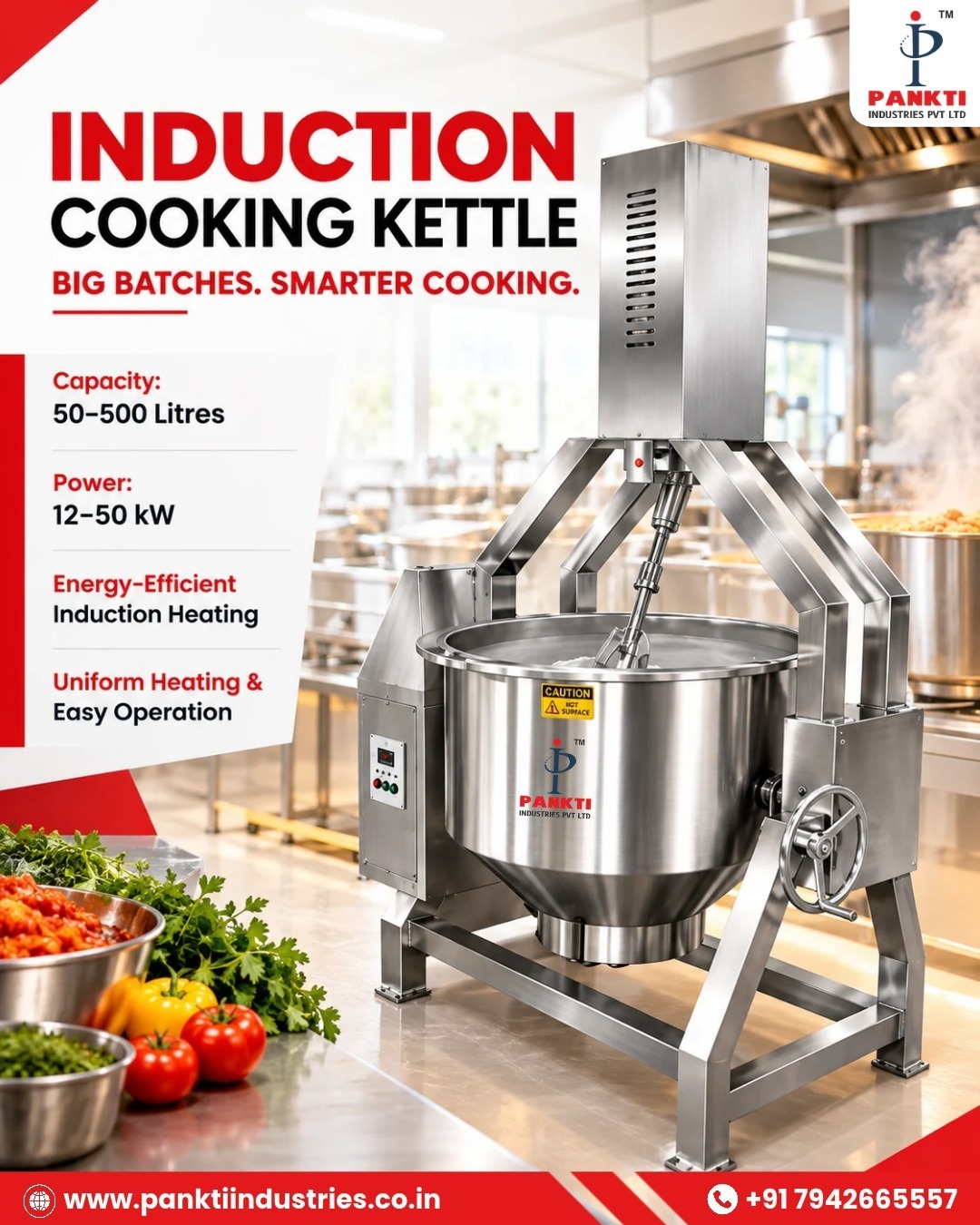
An induction cooking kettle is a commercial appliance that heats and prepares large batches of food using electromagnetic induction. Professional kitchens and food production facilities use it when consistent heating and efficient batch processing are essential.
Depending on the model, an induction kettle may include a stainless steel vessel, digital temperature controls, safety sensors, a fixed or tilting design, and adjustable power settings.
A Commercial Induction Kettle can be suitable for preparing:
* Soups, broths, and sauces
* Gravies, curries, and stews
* Milk and dairy-based preparations
* Porridge and cereal-based foods
* Institutional meals in bulk quantities
* Selected food products in commercial processing facilities
How Does an Induction Cooking Kettle Work?
An induction cooking kettle uses electromagnetic induction to generate heat in a compatible metal vessel. The process typically involves the following steps.
1. Electrical Power Supply
The kettle receives electrical power through a suitable supply. The induction system converts and controls this energy to operate the heating coil.
2. Electromagnetic Field Generation
An induction coil generates a changing magnetic field when energized. This field interacts with a compatible metal vessel positioned within the effective heating area.
3. Direct Heating of the Vessel
The magnetic field induces electrical currents in the suitable metal, heating the vessel itself. This heat transfers to the ingredients inside.
4. Controlled Cooking
The operator adjusts the temperature or power settings according to the recipe and cooking requirements. Depending on the model, electronic controls and sensors help maintain the desired heating conditions.
5. Mixing and Food Preparation
The ingredients are heated to the required cooking stage. Models equipped with suitable mixing or agitation systems can help maintain consistency and reduce localized overheating during certain food preparation processes.
6. Food Discharge and Cleaning
After cooking, transfer the food to the next processing or serving stage. Where provided, a tilting kettle or dedicated discharge arrangement can simplify emptying. Follow the equipment manufacturer’s instructions and applicable food hygiene requirements.
This controlled process makes induction cooking kettles useful for bulk food preparation in commercial kitchens.
What Are the Key Features of a Commercial Induction Kettle?
When evaluating Commercial Kitchen Equipment, consider the following features and verify their availability for the specific model.
Efficient Heating System
Induction technology heats the compatible cooking vessel, reducing unnecessary heating of the surrounding environment.
Temperature and Power Control
Adjustable power levels and temperature controls allow operators to manage different cooking requirements.
Food-Grade Contact Surfaces
Suitable stainless steel surfaces can support hygiene and cleaning when designed for food contact and maintained according to the manufacturer’s guidelines.
Large Cooking Capacity
Commercial kettle capacities vary, allowing businesses to choose equipment based on batch size, menu requirements, and production volume.
Safety Features
Depending on the model, safety provisions may include over-temperature protection, electrical protection, and operating-status indicators.
Tilting or Fixed Design
A fixed kettle may suit certain cooking processes, while a tilting design can simplify discharge when included in the equipment configuration.
Easy Operation and Maintenance
Accessible controls and a suitable cleaning design can help operators manage routine cooking and maintenance tasks.
What Are the Applications of an Induction Cooking Kettle?
An induction cooking kettle supports different food preparation needs in commercial and institutional settings.
· Hotels and restaurants: Preparing soups, gravies, sauces, and bulk menu items.
· Catering businesses: Cooking large batches for events and group dining.
· Hospitals: Preparing meals for patients and institutional kitchens.
· Educational institutions: Supporting bulk cooking in school and college kitchens.
· Food processing units: Preparing compatible liquid, semi-liquid, and other suitable food products.
· Central kitchens: Standardizing batch preparation for multiple outlets.
· Industrial food production: Heating and preparing suitable products under controlled operating conditions.
The right equipment depends on food viscosity, batch size, heating needs, mixing requirements, and cleaning procedures.
What Are the Benefits of Using an Induction Cooking Kettle?
Choosing suitable Industrial Cooking Equipment can help commercial kitchens improve food preparation.
1. Controlled Heating
Adjustable power and temperature settings can help operators maintain the heating conditions required for different recipes.
2. Improved Energy Utilization
Induction heating transfers energy directly into a compatible vessel, potentially reducing heat loss compared with some conventional heating methods.
3. No Open Flame at the Cooking Vessel
Induction heating doesn't require a gas flame at the vessel, which can benefit kitchens seeking to reduce open-flame exposure. Electrical and surface-temperature safety measures are still essential.
4. Consistent Batch Preparation
Repeatable settings can help kitchens maintain similar cooking conditions across multiple batches.
5. Support for Bulk Cooking
Large-capacity models can help food service operations prepare substantial quantities in fewer batches, depending on their requirements.
6. Better Working Conditions
Reduced direct heating of the surrounding area may improve thermal comfort in some kitchen environments. Overall kitchen ventilation and heat management remain important.
7. Streamlined Operations
When available, features such as digital controls, tilting mechanisms, and mixing systems can simplify cooking and discharge procedures
Actual energy consumption, cooking time, and productivity depend on the model, batch size, ingredients, and operating practices.
How Do You Choose the Right Induction Cooking Kettle?
Before buying an induction cooking kettle, evaluate these factors to find equipment that matches your kitchen’s needs.
· Capacity: Choose a vessel size that matches your typical batch volume.
· Heating power: Confirm the power rating and heating performance required for your recipes.
· Electrical requirements: Verify voltage, phase, current, and installation requirements.
· Temperature control: Select controls that suit your cooking process and desired temperature range.
· Vessel material: Confirm compatibility with the induction heating system.
· Food compatibility: Check whether the kettle suits the viscosity and characteristics of the products you prepare.
· Mixing requirements: Determine whether an agitator or mixing system is necessary.
· Discharge arrangement: Consider a tilting vessel or other suitable discharge mechanism.
· Cleaning and hygiene: Evaluate food-contact surfaces, drainage, and cleaning access.
· Maintenance and support: Review service availability, spare parts, warranty terms, and manufacturer support.
Consulting an experienced food processing machinery supplier can help you compare technical specifications and select an appropriate configuration.
Why Consider Pankti Industries Pvt. Ltd.?
Pankti Industries Pvt. Ltd. is the right contact for product information and equipment requirements for your commercial cooking needs.
When evaluating an induction cooking kettle, ask for verified specifications covering vessel capacity, induction power, temperature range, material construction, safety provisions, and available discharge or mixing features.
Matching the equipment to your food preparation process is essential for reliable operation, manageable cleaning, and consistent cooking results.
Contact Pankti Industries Pvt. Ltd. to discuss your requirements and request product specifications for an induction cooking kettle suited to your application.
Frequently Asked Questions
1. What is an induction cooking kettle used for?
It heats and prepares large batches of food, including soups, sauces, gravies, curries, and other suitable products, in commercial kitchens and food processing facilities.
2. How does an induction cooking kettle generate heat?
An induction coil generates a changing magnetic field that heats a compatible metal vessel through electromagnetic induction.
3. Is a commercial induction kettle suitable for bulk cooking?
Yes. Commercial models are designed for batch cooking, but the right capacity and heating power depend on the volume and type of food you're preparing.
Keywords